Moisture Detection in Conroe TX
Moisture detection Conroe TX property owners rely on is essential after water damage, flooding, or hidden leaks. Even when surfaces appear dry, moisture can remain trapped inside walls, subfloors, insulation, and structural framing. Professional moisture inspection helps identify hidden water before it leads to mold growth or structural deterioration.
Orbit Water Restoration uses advanced moisture detection equipment to accurately locate and document moisture issues across Conroe and Montgomery County.
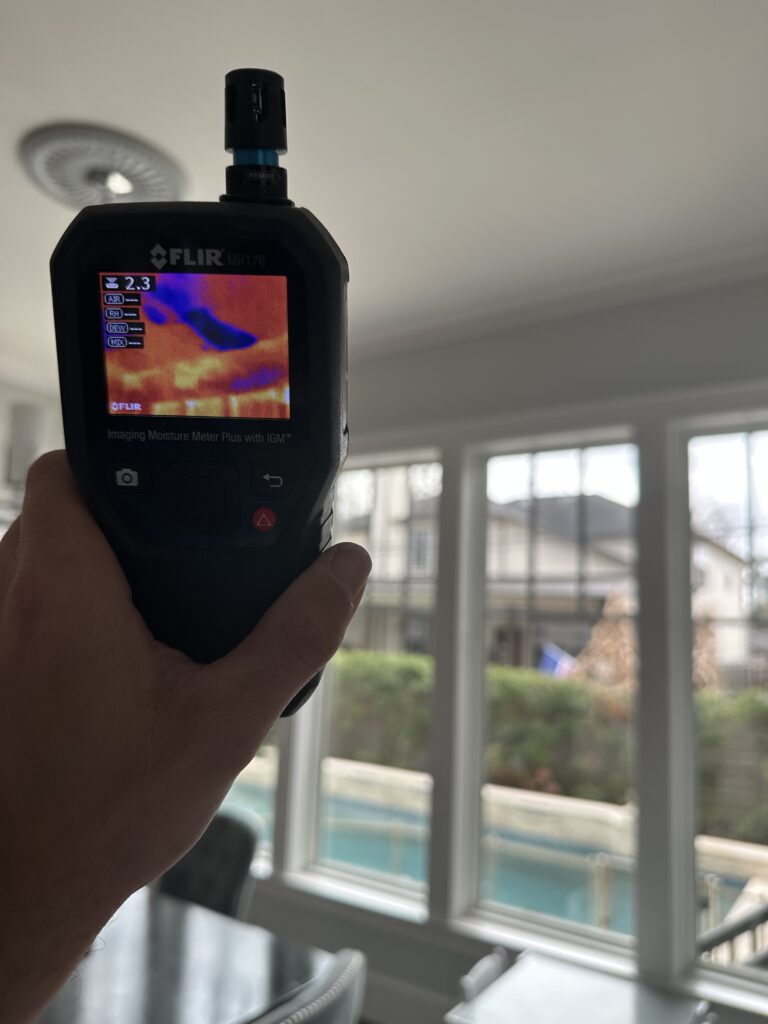
Why Professional Moisture Detection Matters
After a leak or flood, visible water is only part of the problem. Moisture often migrates behind drywall, beneath flooring, and into framing cavities.
Without professional detection:
Mold can develop within 24–48 hours
Structural materials may weaken
Drying efforts may be incomplete
Insurance claims may lack proper documentation
Moisture detection Conroe TX homes require ensures proper drying verification and prevents secondary damage.
How Moisture Detection Equipment Works
Moisture detection tools are designed to measure the amount of water present inside building materials. Materials such as drywall, wood framing, concrete, and subflooring absorb moisture differently depending on their density and composition.
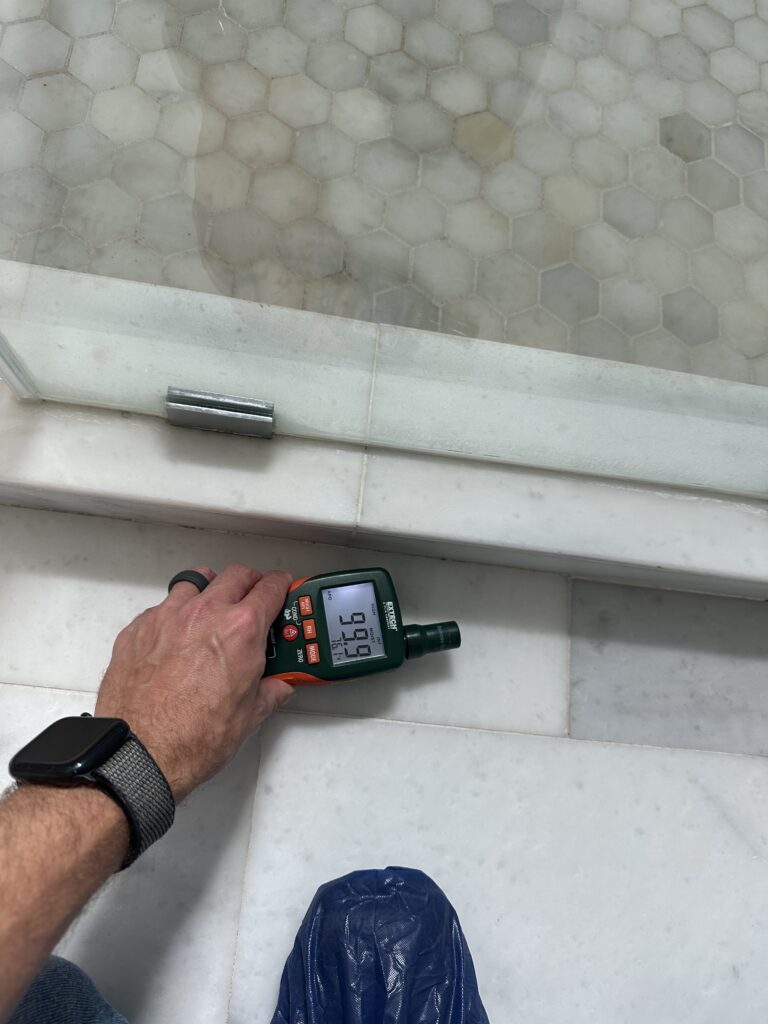
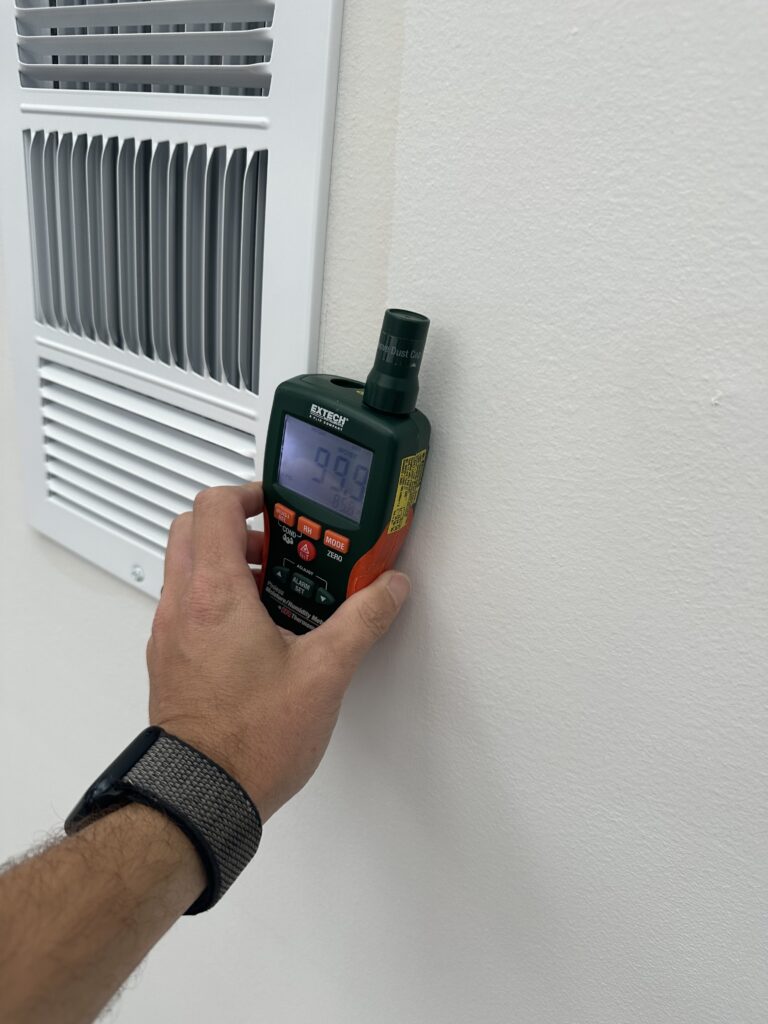
Professional moisture meters work by measuring electrical resistance or conductivity within a material. Because water conducts electricity more effectively than dry material, increased moisture levels change the meter’s readings. By comparing these readings to standard dry baselines, technicians can determine whether materials are within safe moisture ranges.
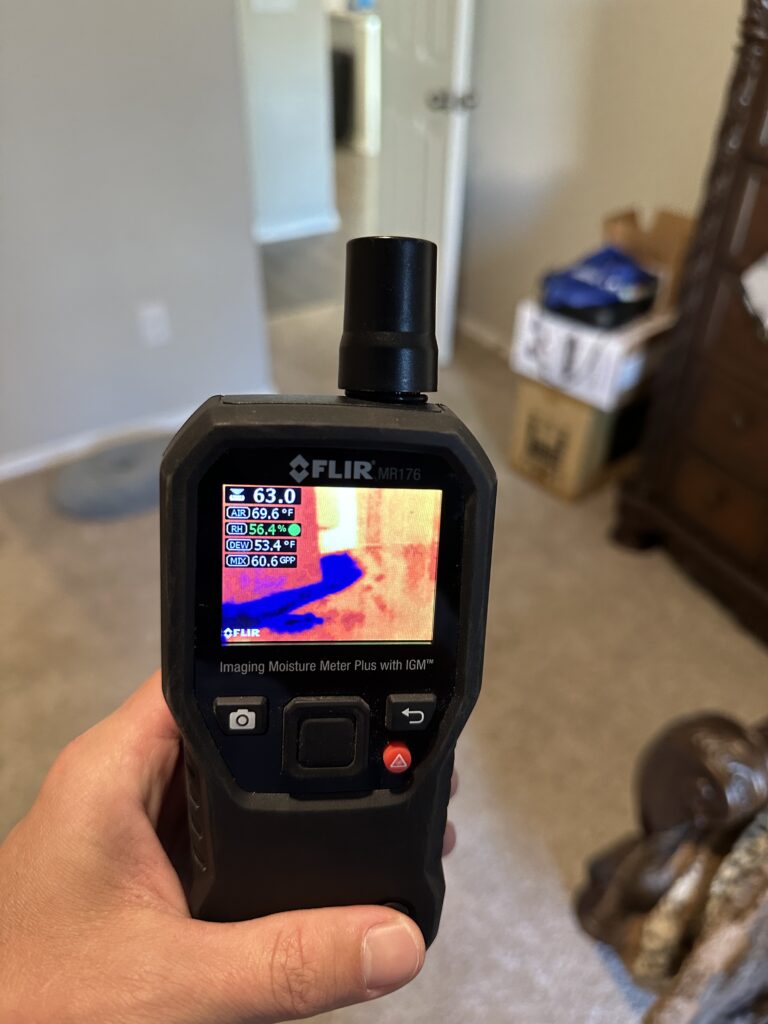
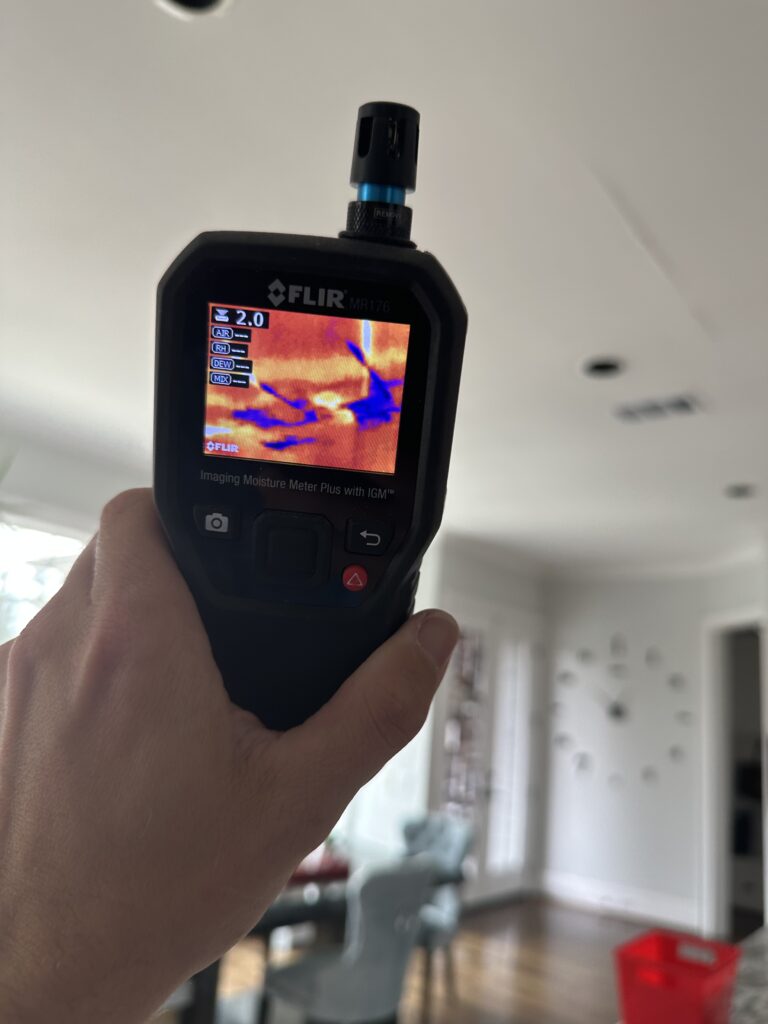
Infrared thermal imaging cameras do not directly measure moisture. Instead, they detect surface temperature differences that may indicate evaporation or hidden water intrusion. Thermal anomalies are then confirmed using moisture meters for accurate readings.
Understanding how building materials retain and release moisture allows trained professionals to determine whether drying has been completed properly or if additional mitigation is required.
Accurate moisture measurement prevents unnecessary demolition while ensuring hidden moisture is not left behind.
Our Moisture Detection Process
1. Visual Assessment
We begin by identifying visible signs of water intrusion, staining, warping, or material deterioration. This initial assessment helps determine where moisture may have migrated beyond surface-level damage and guides further testing.
2. Moisture Meter Testing
Professional-grade moisture meters are used to measure moisture content within drywall, wood framing, subfloors, and flooring materials. These readings provide accurate data on how deeply moisture has penetrated structural components.
3. Thermal Imaging Inspection
Infrared cameras help identify temperature variations that may indicate hidden moisture behind walls, ceilings, or flooring systems. Thermal imaging allows us to locate problem areas that are not visible to the naked eye.
4. Moisture Mapping
We document affected areas and create a detailed moisture map to guide drying efforts and monitor progress. Mapping ensures no impacted sections are overlooked during mitigation or follow-up testing.
5. Drying Verification
After mitigation is complete, we re-test moisture levels to confirm the structure has returned to safe, dry standards. Verification ensures that drying goals have been achieved before reconstruction or re-occupancy.
6. Detailed Reporting and Recommendations
Once moisture levels are verified, we provide documentation outlining findings, affected areas, and recorded readings. If additional mitigation or repairs are needed, we outline the recommended next steps to ensure long-term structural protection.
Moisture Detection After Water or Flood Damage
Moisture detection is commonly required after:
Burst pipes
Storm-related flooding
Roof leaks
Slab leaks
Sewage backups
If you are currently dealing with active water intrusion, our water damage restoration in Conroe TX services address extraction and structural drying before verification begins.
After flooding, professional flood damage cleanup should be completed before final moisture confirmation.
Moisture documentation may also support insurance claims following water damage.
Preventing Mold Through Accurate Moisture Inspection
Hidden moisture is one of the leading causes of mold growth.
Professional moisture detection Conroe TX properties require helps prevent:
Mold colonization inside wall cavities
Air quality issues
Costly reconstruction
Long-term structural decay
If mold has already developed, professional mold remediation may be required.
When Should You Schedule Moisture Detection?
You should consider professional moisture inspection if:
Drywall feels soft or swollen
Flooring is warping
There is a musty odor
You recently experienced flooding
You suspect a hidden plumbing leak
You are buying or selling a home
Moisture detection provides clarity before minor issues become major repairs.
Moisture Detection Conroe TX Property Owners Can Trust
Moisture detection Conroe TX homeowners trust requires precision equipment and trained technicians. Proper structural moisture testing ensures drying has been completed correctly and that no hidden moisture remains.
Our team documents readings, verifies safe moisture levels, and provides detailed reporting to support restoration or insurance claims.
Serving Conroe and Montgomery County, we help property owners confirm their homes are dry, stable, and protected.
Serving Conroe and Montgomery County
We provide professional moisture detection services in:
Conroe
The Woodlands
Magnolia
Tomball
Willis
Montgomery
Surrounding Montgomery County communities
Orbit Water Restoration — we’ll take it from here.
Frequently Asked Questions About Moisture Detection
Yes. Moisture can remain trapped behind walls or under flooring even when surfaces appear dry.
Thermal imaging helps identify temperature differences but must be confirmed with moisture meter testing.
Many insurance claims require proof of proper drying and moisture verification.
Inspection time depends on property size and severity of water intrusion.